

Excursion destinations, culture and nature!
Excursion destinations
Fancy mining? - The Imsbach mining adventure world
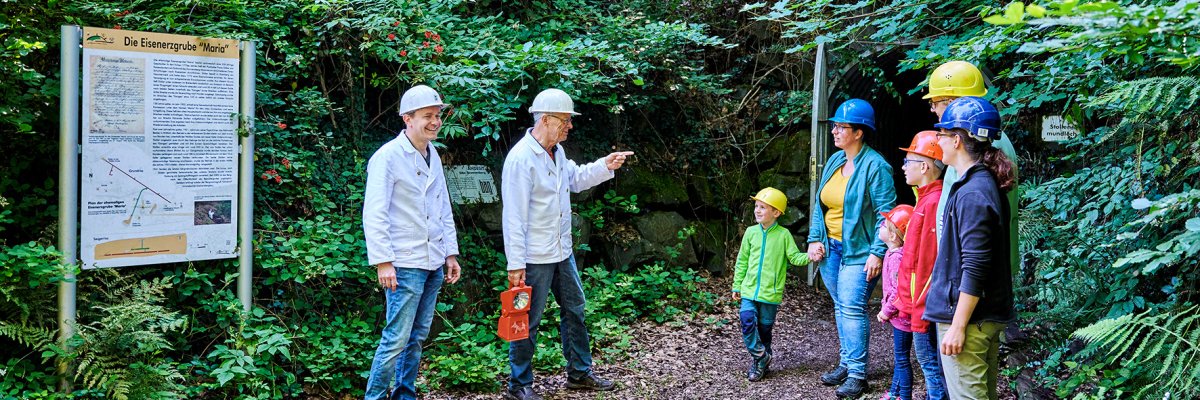
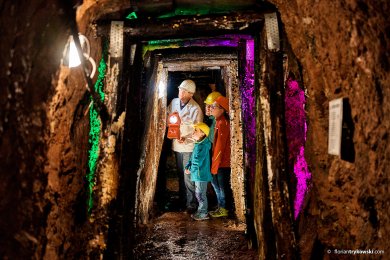
Mining has a long tradition in the Palatinate, in some areas dating back to Celtic times. In the Palatinate Mining Museum and in the two visitor mines "Weiße Grube" and "Grube Maria" in the former mining village of Imsbach, you can marvel at the variety of mineral resources that have been extracted here over the past two millennia. Three mining-historical circular hiking trails can be explored all year round on your own or on guided tours.
GeoTours - a journey through the history of the earth
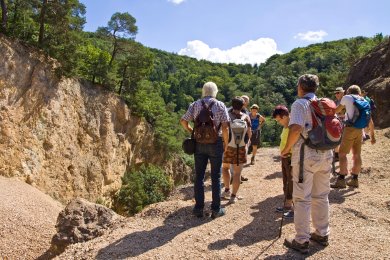
Not only in Imsbach, but also at numerous other geologically interesting objects around the Donnersberg, there are information boards that illustrate the connections between geology, deposits and settlement history. On the guided geo-tours in the Donnersberg region, you have the opportunity to take an exciting journey through 300 million years of geological history accompanied by an expert tour guide. How did today's Donnersberg emerge from a former volcano, what traces did mercury mining leave behind in the Northern Palatinate and what do the remains of a vanished sea look like? Exciting questions that our tour guides will be happy to answer on a geo-tour. A great experience - not just for die-hard geology fans.
Celtic village on the Donnersberg - in touch with history
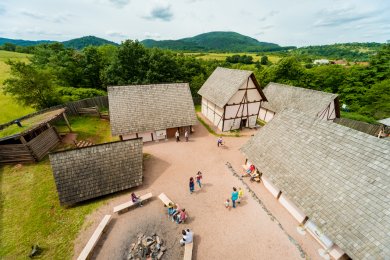
Not a museum in the classic sense - in the Celtic village of Steinbach, visitors can follow in the footsteps of the people who lived on the Donnersberg over 2000 years ago with all their senses. The traditional farmstead settlement gives visitors a good impression of the craft techniques used by the Celts to build their houses. In addition to expert guided tours, there are numerous hands-on activities where not only children can test their creativity and skills.
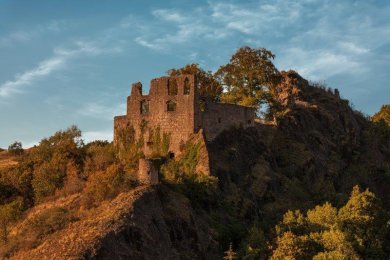
Falkenstein castle ruins - moonlight tours and medieval spectacle
Through the wild and romantic Falkenstein valley and along the steepest main road in the town with a gradient of up to 25%, even the journey to Falkenstein is a record-breaking experience. The castle ruins, once the ancestral seat of the counts of Falkenstein, still tower over the municipality located on the south-western foothills of the Donnersberg. In addition to a magnificent panoramic view, the castle ruins and the adjoining open-air stage provide the perfect setting for guided tours of the castle by moonlight, literary hikes, geotours, concerts and medieval markets.
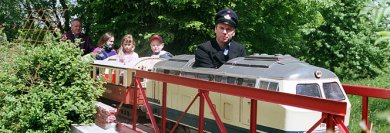
Börrstadt Garden Railway - Train ride on a scale of 1:5!
As the only 1:5 scale model railroad in Germany where passenger transportation is permitted, the Börrstadt garden railroad not only delights children and die-hard railroad enthusiasts. The locomotives built by Karl-Heinz Jung are based on original models. The area around the community hall with its station, signal box, tunnel, bridge and level crossing provides the perfect backdrop for an enjoyable round trip on the garden railroad.
Culture galore - Museums
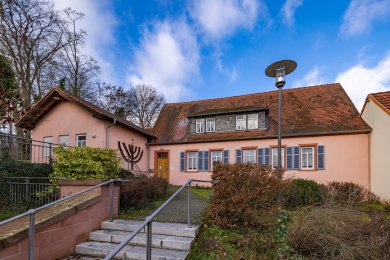
Museum Winnweiler - Jewish Museum of the Northern Palatinate, Winnweiler
Get to know the eventful and moving Jewish history of the Northern Palatinate. The museum focuses on village and small-town Jewry in the Northern Palatinate, its historical development from Roman times to deportation during the Second World War, as well as aspects of Jewish faith and Jewish life.
The museum also focuses on the history of Winnweiler and the surrounding area, starting with prehistory and early history.
In the fall of 2012, the Gienanth section was added to the Winnweiler Museum. Here, the history and significance of the von Gienanth industrial family is presented just as vividly as the history of their numerous iron-producing and iron-processing factories in the Palatinate. The focus is on the two foundries formerly based in Winnweiler-Hochstein, the copper and iron smelters.
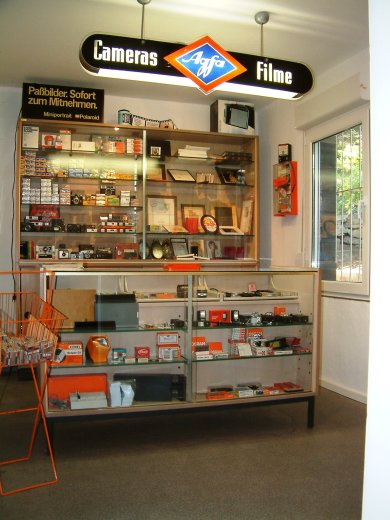
Museum of Photography and Photographic Crafts, Winnweiler
The Museum of Photography and the Photographer's Trade uses the former business premises of the Boertzel photography house, which was founded around 1890 and operated in this property from 1900 to 1997.
The studio and darkroom are fully functional and are used for demonstrations and courses. In addition to the basic equipment, a collection of cameras and photographic accessories is on display, providing an excellent overview of developments in the photographic trade over the last 100 years. The "Gallery in the Tower", which is part of the museum, shows changing photo exhibitions that can be viewed during a visit to the museum.
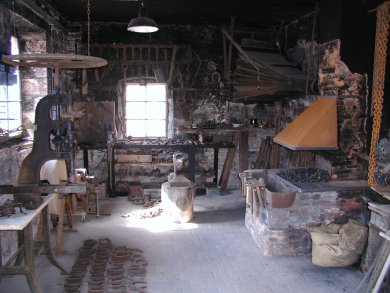
Museum forge Langmeil, Winnweiler
The Langmeil museum smithy provides a long-forgotten insight into the working areas of a rural village smithy as it was still found in this region until the 1950s and 1960s. Most of the equipment dates from before the Second World War. A brick forge with an embedded water vessel is located in the center of the museum forge.
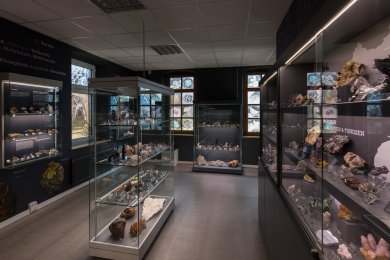
Palatinate Mining Museum, Imsbach
The mining experience world in Imsbach reflects more than 2,000 years of mining history. In the former school building, the Palatinate Mining Museum presents everything about ores, rocks and the fossil fuels of the region. The deposits, extraction and processing of iron, manganese, copper, cobalt, gold, silver and mercury are explained, as is the use of the stone and earth raw materials still in use today. A new feature is the "Terra Crystallum" mineral show.
Interesting special exhibitions and specialist lectures round off the offer.
You can experience historical mining up close in the Weiße Grube and Grube Maria visitor mines.
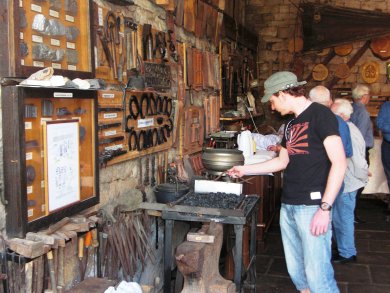
Village museum "Leo's Tenne", Schweisweiler
In the village museum, which was established in 1989, you can gain an insight into old trades such as stonemasonry, brickmaking, wainwrighting, hammersmithing and hand shaping.
In the "Gut Stubb" of the associated farmhouse (with a farm garden worth seeing), an extensive photo collection provides information about the history of the village of Schweisweiler.
In Schweisweiler there is also a rococo church dating back to 1750 that is well worth seeing and a nature trail.
Pure nature
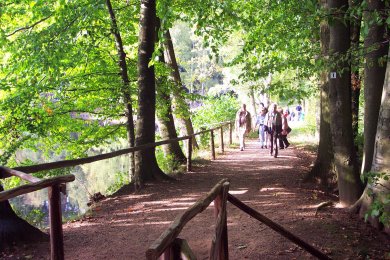
Upper Pfrimmtal
The scenic Pfrimmtal valley lies in the middle of the Palatinate Forest Nature Park. Relaxing tranquillity, shady forests, fresh air and clear water invite you to "recharge your batteries". Idyllic hiking trails lead through the "Sippersfelder Weiher" nature reserve, from the Pfrimmerhof farm to the Pfrimm spring. Past the Steiger, Krebs, Retzberg and Mühlen ponds, the wonderful views of the Donnersberg and the plain towards Kirchheimbolanden are particularly enjoyable. The Retzbergweiher pond is particularly popular in June, when it is covered in blooming water lilies - but also provides the perfect backdrop for the annual "Forest Christmas" in December.
Hikers' huts and restaurants at the Retzbergweiher pond, the Pfrimmerhof and in the communities of Sippersfeld and Breunigweiler invite you to stop for a bite to eat all year round. There are seven marked hiking trails in the Upper Pfrimmtal, which vary in length and altitude difference. In addition to Sippersfeld and Breunigweiler, the municipalities of Börrstadt and Gonbach are also connected to the local hiking trail network. In Gonbach, a beautifully designed Kneipp facility invites you to take a refreshing break and strengthen your immune system.
More about the Pfrimmtal hiking trails...
Alsenz valley
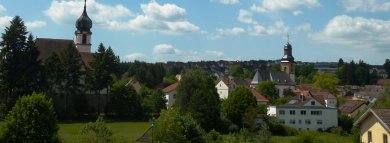
The wild and romantic Alsenztal valley is characterized by alternating forests, meadows, vineyards and picturesque villages and connects the Palatinate Forest with the Naheland region. The open mountain slopes offer magnificent views, for example of the Donnersberg - the highest mountain in the Palatinate at 687 meters. The geographical location and fertile soils in the lower Alsenz Valley favor viticulture.
The local beer brewing history is unique in the region: The only private brewery in the Palatinate brews the popular barley juice in Winnweiler.
The Alsenztal hiking trail begins at the source of the Alsenz in Alsenborn and leads to Bad Münster am Stein-Ebernburg, where the Alsenz flows into the Nahe. The entire route is 57 km long and can be hiked in four daily stages. More
The Alsenztal can be explored not only on foot - cyclists can also get their money's worth on the consistently marked Alsenztal cycle path.
The private brewery in Winnweiler and numerous restaurants offer cyclists and hikers good reasons to take a break, as do various sights along the route.